Behind the Scenes: The Making of Our Williams F1 Film
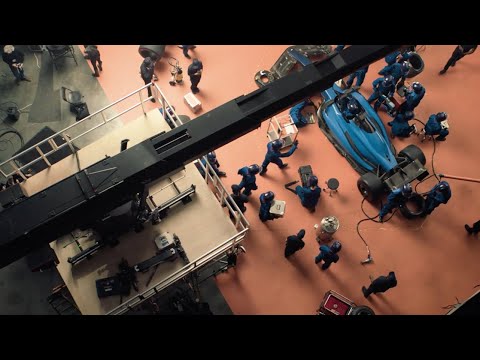
Behind the scenes of our Atlassian Williams F1 Team partnership film, directed by Dan Tobin Smith. How Anthropic approached storytelling about the human side of AI in high-performance racing.
This lesson is original educational writing based on this video by Anthropic (published February 10, 2026). All credit for the original content goes to the creators.
AI Storytelling as a Strategic Discipline
Every major AI deployment tells a story, whether the organization intends it to or not. The story a company tells about its AI — through press releases, case studies, advertising, and film — shapes how employees adopt it, how customers understand it, and how the public trusts it. When that story is told badly, even genuinely valuable AI integration gets undermined. Engineers resist tools that feel like threats. Customers distrust services they can’t understand. Regulators scrutinize organizations that communicate about AI in vague or grandiose terms. The story is not decoration. It is infrastructure.
Anthropic’s approach to the Williams F1 partnership film is a deliberate demonstration of what good AI storytelling looks like. The choice to produce a film at all — rather than a press release or a case study — signals an intent to communicate through emotion and image rather than through specification sheets. Film reaches the part of the audience’s mind that makes trust decisions, not the part that evaluates technical features. When you want people to understand not just what an AI system does but how it feels to work alongside it, film is the right medium.
The central narrative choice is the most important one: the film is about the people whose work is augmented, not about the technology that augments them. The engineers, the strategists, the driver — these are the protagonists. Claude is the thinking partner in the background, the enabling presence that makes their work sharper and less burdened. This is a precise inversion of the narrative trap that most AI communication falls into, which centers the AI itself: the system that is so powerful, so capable, so transformative. That narrative, however exciting it sounds, creates anxiety. It positions the technology as the agent and the human as the passive recipient. Anthropic’s film does the opposite: the human is the agent, and the AI is the partner.
Dan Tobin Smith’s Visual Language
The choice of director matters as much as the narrative choice. Dan Tobin Smith is a British photographer and filmmaker known primarily for his meticulous approach to color, structure, and visual order. His most recognized photographic work involves arranging objects by color into long chromatic gradients — an almost obsessive imposition of pattern onto the visual field. He finds the underlying structure in chaos and makes it visible.
This sensibility is not incidental to the Williams partnership film. The entire purpose of the “Pattern of Thought” system — and of the broader Anthropic–Williams collaboration — is to make invisible patterns visible. The team’s cognitive work during a race is chaotic and fragmented in real time. Radio communications overlap. Sensor data arrives in torrents. Decisions cascade from each other in rapid succession. What Pattern of Thought does, and what the film attempts to communicate visually, is impose legibility on this cognitive chaos. It finds the pattern in the thought.
Tobin Smith’s background in structured photography makes him an ideal translator for this concept. When he frames a shot of a Williams engineer watching telemetry data, he is not simply documenting a person at a computer. He is constructing a visual argument: that the patterns on that screen are the same kind of pattern that he has spent a career making visible in color gradients and organized compositions. The technical and the aesthetic mirror each other.
This is what sophisticated brand communication does at its best. It finds a director whose native visual vocabulary is genuinely aligned with the concept being communicated, rather than hiring a competent generalist and pointing them at a brief. The result is coherence between form and content — the way the film looks embodies what the film is about.
Motion, Speed, and Focus as Visual Metaphors
Formula 1 provides an extraordinarily rich vocabulary of visual metaphors for AI capability. The speed of a racing car is a genuine analog for computational speed. The precision required in a pit stop — where the margin between a world-class stop and a mediocre one is measured in tenths of a second — mirrors the precision required in high-quality language model outputs. The focus required of a driver navigating the Monaco circuit at racing speeds, processing information and making micro-corrections faster than conscious thought, mirrors the sustained attention of a system processing dense technical information without loss of coherence.
The film uses all of these metaphors deliberately. When it cuts from a shot of a car at speed to a shot of data flowing across a screen, it is drawing a visual equation: the car’s speed and the system’s processing are of the same kind. When it shows a driver’s eyes in close-up — the focus, the concentration, the reduction of the world to the essential — it is showing the cognitive state that Claude supports. Reducing cognitive load means freeing the human expert to achieve exactly that quality of focus: to see only what matters, at the moment it matters.
This is how great product filmmaking works. It does not show you a feature list. It puts you in the emotional and cognitive state that the product is designed to create, and it associates that state with the product’s visual identity. After watching the film, a viewer does not necessarily know how Claude integrates with Atlassian’s workflow software. But they know how it feels to have a thinking partner in a high-stakes environment — sharp, fast, trustworthy, always present when it matters.
Anthropic’s Communication Philosophy in Practice
The Williams film is not an isolated creative project. It is a specific expression of the communication philosophy Anthropic applies consistently across its public work: helpful, human, collaborative. These three words are doing specific work.
“Helpful” is a refutation of AI for its own sake. Anthropic is not building Claude because general intelligence is an interesting technical achievement. It is building Claude because there are real cognitive problems — in organizations, in research, in professional practice — that could be better addressed with AI assistance. The film is helpful because it demonstrates a concrete use case rather than gesturing at abstract capability.
“Human” is a refutation of the displacement narrative. The most corrosive story about AI, and the one that drives the most resistance to adoption, is the story in which AI makes humans redundant. The Williams film explicitly contradicts this. Every human in the film is more effective, not less relevant. The engineer reads the data better. The strategist makes the call with more confidence. The driver focuses on driving. The AI is a partner, not a replacement, and the film makes this visible at an emotional rather than a propositional level.
“Collaborative” is a refutation of autonomy anxiety. One of the most common concerns about AI systems is that they operate as black boxes — making decisions or generating outputs that humans cannot understand or override. Collaboration implies the opposite: a relationship in which both parties contribute, in which the AI’s contribution is legible to the human expert, and in which the human remains in control of consequential decisions. The film’s depiction of Claude as a thinking partner rather than an autonomous agent directly addresses this concern.
These three principles — helpful, human, collaborative — are not just communication choices. They are design commitments that Anthropic builds into Claude itself. The film works as communication precisely because the story it tells is true to the product it is describing. This coherence between product and narrative is the deepest lesson the Williams film offers to organizations thinking about their own AI communication strategy.
What Organizations Can Learn
When an organization deploys AI and needs to communicate that deployment — to employees, to customers, to the public — the Williams film offers a practical template with several transferable principles.
First, choose real use cases over hypothetical capability. The Williams film does not say “imagine what AI could do for racing.” It shows what Claude is actually doing for a specific team in a specific competitive context. Real use cases build credibility in ways that capability demonstrations cannot.
Second, center real people. The most effective AI communication is not about the AI. It is about the person whose work becomes better. Find that person in your organization — the analyst who used to spend three hours preparing a briefing and now does it in thirty minutes — and tell their story.
Third, choose your medium deliberately. A case study reaches a different audience than a film. A film reaches a different audience than a demo. A demo reaches a different audience than a customer testimonial. The Williams film chose cinematic production because the goal was to communicate trust and emotion, not technical specifications. Know what you are trying to communicate before you choose the medium.
Fourth, avoid both traps: over-promising and under-explaining. Over-promising erodes trust when the reality does not match the claim. Under-explaining — being vague about how AI is actually involved — generates suspicion and speculation. The Williams film hits neither trap because it is specific about what Claude does while being human about who it serves.
Check your understanding
5 questions · your answers are saved in this browser only
-
1. Why is the narrative choice to center human characters — rather than the AI itself — strategically important in the Williams film?
-
2. Why was Dan Tobin Smith's background in structured, color-organized photography relevant to directing the Williams film?
-
3. Which of the following best describes the 'dual traps' that effective AI communication must avoid?
-
4. What three principles describe Anthropic's communication philosophy as demonstrated by the Williams film?
-
5. What is the most important reason that real use cases build more credibility than capability demonstrations?
Build it yourself
Follow these exact steps to reproduce it yourself · estimated time: ~35 minutes
Prerequisites
- Access to Claude
- A real AI use case in your organization where someone's work was enhanced
Step 1 — Find the right person and story
Identify a specific person in your organization whose work has genuinely changed because of AI — not an abstract claim, but a concrete example. Maybe it is a data analyst who used to spend hours on reports, a customer support agent who handles more complex cases than before, or a writer who produces better first drafts. The more specific the person and the situation, the more credible the story will be.
Step 2 — Structure the narrative arc
Write a one-page summary of the story using this structure: (1) What was the challenge or cognitive burden before AI? (2) How does AI — specifically Claude or another system — enter the workflow? (3) What does the human expert still do that the AI cannot? (4) What is the concrete outcome? This structure ensures the human remains the protagonist and the AI’s role is accurately bounded.
Step 3 — Ask Claude to stress-test your narrative
Paste your summary into Claude and ask: “I’m going to share a story about AI integration in my organization. Please read it and tell me: does it over-promise? Does it under-explain? Does it make the human the protagonist? Does it avoid positioning AI as autonomous? Suggest specific improvements.” Use Claude’s feedback to tighten the narrative.
Step 4 — Choose the right medium
Ask yourself who needs to hear this story and in what context. Employees in an all-hands meeting need a different format than potential customers on a website, which is different again from regulators reviewing a compliance filing. Ask Claude: “Given this story and this audience [describe your audience], what is the best medium — written case study, short film, live demo, customer testimonial, or executive presentation? Explain the trade-offs.” Then commit to the medium that matches the communication goal.
Step 5 — Identify your visual metaphor
If your story will include any visual elements — slides, graphics, a short video, photography — ask Claude: “What visual language would authentically represent the cognitive experience of [your use case]? What does it feel like when this AI assistance works well — what imagery captures that state?” Great AI communication makes the cognitive experience tangible. Find the image that does that for your specific story.